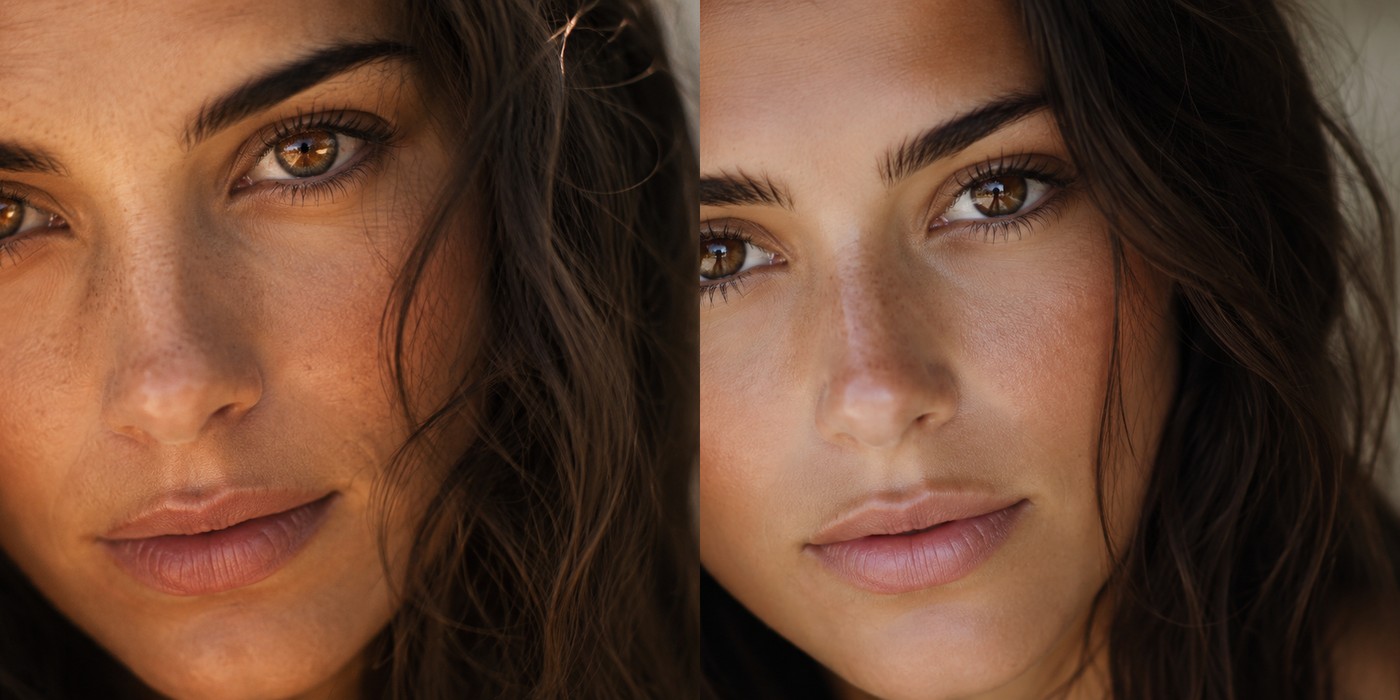
Amber vs Brown Eyes: What Makes Them Different?
Amber and brown can look surprisingly close in real life. Warm brown eyes may glow in sunlight, while amber eyes can look darker indoors. Start with the color you notice first across the whole iris: golden or coppery points toward amber, while a clearly brown base points toward brown.
The main difference
Amber eyes usually look more golden, honey-like, or coppery. Brown eyes usually look deeper, richer, and more uniformly brown, even when they pick up warm highlights.
Amber and brown eyes compared
| Feature | Amber eyes | Brown eyes |
|---|---|---|
| First impression | Golden, honey, copper, or bronze | Brown, deep brown, medium brown, or light brown |
| Overall tone | Usually warm and luminous | Usually richer, deeper, or more clearly brown |
| Pattern | Often more even across the iris | Can be even, dark, soft, or warm brown |
| Sunlight effect | May look more golden or coppery | May show warm highlights but still reads brown |
| Closest mix-up | Hazel, golden brown, light brown | Amber, light brown, hazel-brown |
The easiest rule
A good first check is to ask what color you notice first in soft natural light. If the eye looks golden, honey-like, or coppery first, amber may be the better label. If it looks brown first, even with warm highlights, brown or light brown is usually the safer category.
Amber eyes usually have a more even golden warmth across much of the iris. Brown eyes can glow beautifully in sunlight, but they still usually keep a brown base.
The border can be subtle, especially with light brown or golden brown eyes. Compare the whole iris in ordinary daylight instead of relying on one bright photo.
What amber eyes usually look like
Amber eyes tend to feel warm and luminous in a more distinctive way than brown eyes. The iris often looks honey-toned, golden, or coppery across much of its surface. The color feels like a warm glow rather than a deep brown base.
That’s also why amber pulls so much curiosity. It’s rare, visually specific, and easy to misunderstand.
Still, true amber should be treated as a narrower category than warm brown. That protects the integrity of the rarity system.
What brown eyes usually look like
Brown eyes usually read as brown first, even when they lighten a little in sun or look richer against certain clothing. They may be dark brown, medium brown, or warm brown, but the dominant identity is still brown rather than golden.
Brown sits at the common end of the rarity scale, which makes it a useful baseline when you’re comparing warmer shades against truly rarer ones.
Where light brown complicates things
Light brown eyes are the hardest to separate from amber because they can look golden in sunlight. The key difference is the base color. Light brown eyes usually still look brown overall, while amber eyes usually look golden, honey-like, or coppery overall.
If your eyes look brown indoors and only amber in one bright photo, light brown may be the better label. If they look golden or coppery in steady natural light, amber becomes more likely.
For a closer check, compare light brown eyes with amber eyes.
How to decide between them
Look in soft natural light and ask what the first impression is. Brown or golden? If the answer is brown, even with warmth, go with brown or light brown. If the answer is golden, honey-like, or coppery across the iris, amber becomes more likely.
Then compare your eyes with the chart and the dedicated pages. That’s a more reliable path than trying to decide from a single dramatic photo.
A useful rule is that amber feels golden first, while brown still feels brown first.
Why warm eyes are so easy to over-label
Warm eyes invite wishful thinking because sunlight can make them look dramatic and rare. A softly glowing brown eye may suddenly seem amber in one bright photo. That’s completely understandable, so the best approach is gentle comparison rather than overconfident labeling.
The point isn’t to make brown eyes sound less interesting. It’s to separate an overall amber tone from brown eyes catching especially warm light.
That distinction is one of the most practical services the collection can offer.
Why the distinction matters
The difference matters because amber and brown sit in different parts of the rarity conversation. Brown eyes are the most common eye color worldwide, while true amber eyes are much less common and harder to identify clearly.
That doesn’t make brown eyes less interesting. Brown eyes can be deep, warm, golden, soft, or almost black-looking. Amber usually needs a stronger golden, honey, or copper first impression than ordinary brown eyes catching sunlight.
If your eyes sit near the border, compare them in natural light and look at the overall color across the iris. A single bright photo can make warm brown eyes look more amber than they appear in everyday life.
Sources and notes
This comparison covers normal eye-color appearance and isn’t medical advice.