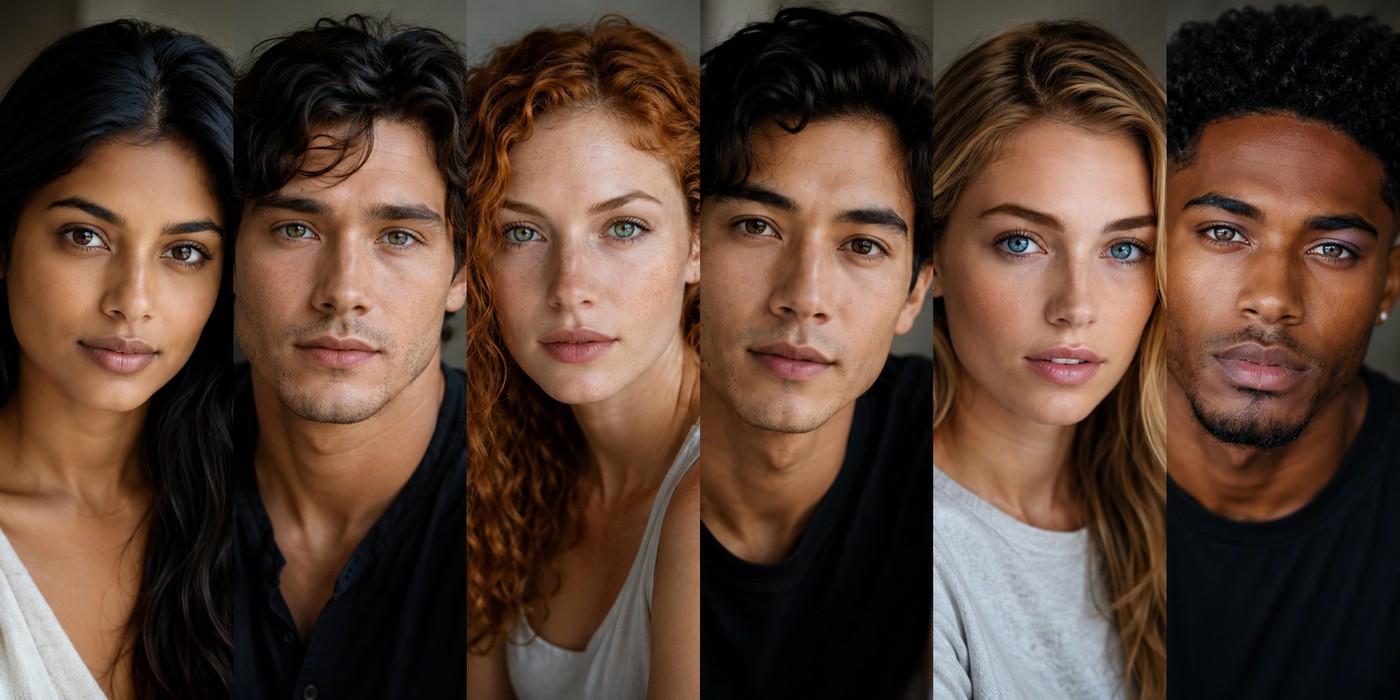
Eye Color Percentages Worldwide
Worldwide eye-color percentages give a useful big-picture view of what’s common and what’s unusual. Brown eyes dominate globally, while blue, hazel, green, gray, amber, red-looking, violet-looking, and heterochromia patterns make up much smaller groups.
Exact numbers can vary because different sources group eye colors differently. The most useful way to read worldwide percentages is as a broad map, not a perfect headcount.
What the worldwide estimates show
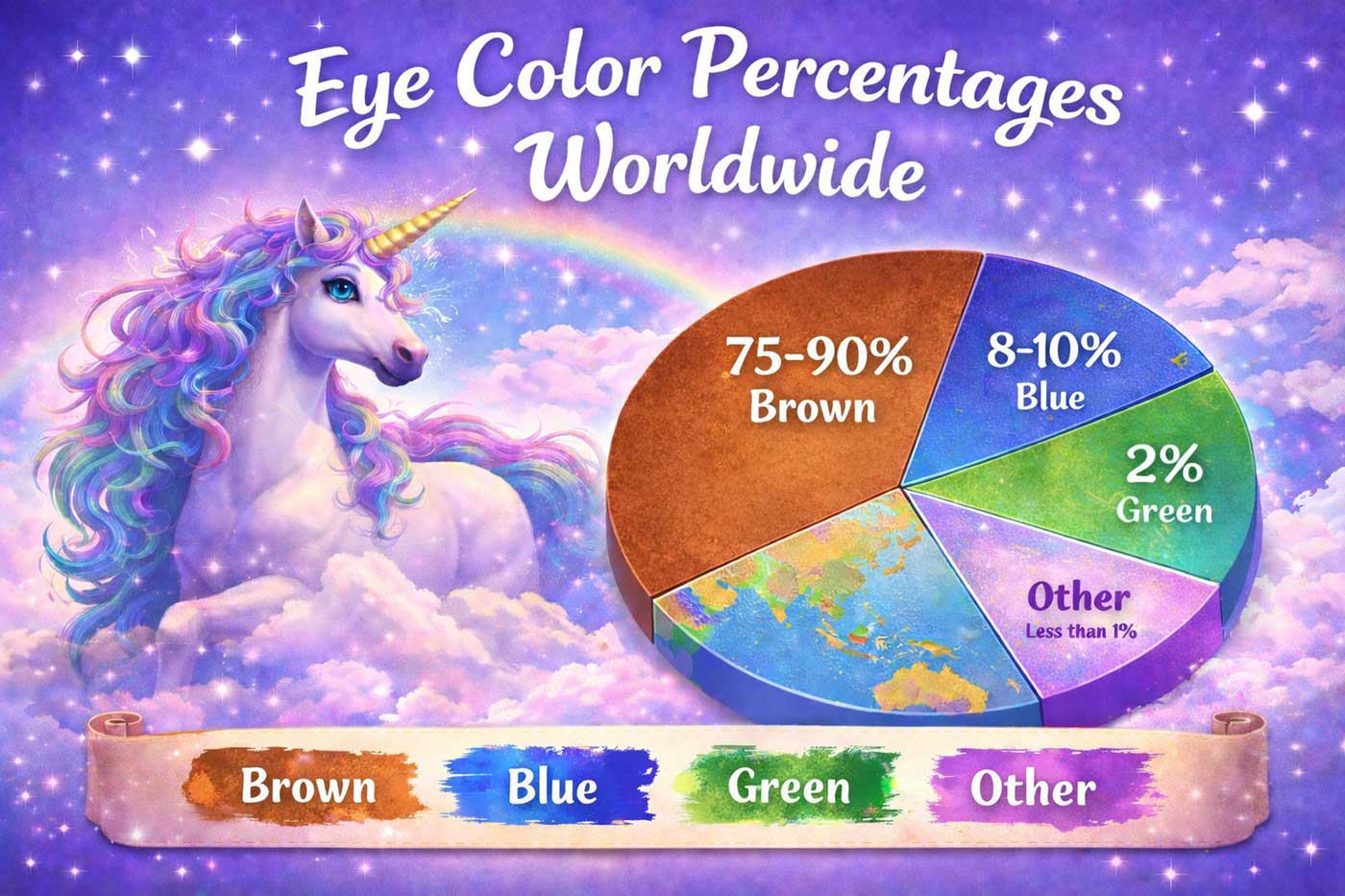
Worldwide eye color percentages are best treated as broad estimates. Brown eyes are generally the most common around the world. Blue eyes are much less common globally, even though they may be familiar in some regions. Hazel, green, gray, amber, red-looking, violet-looking, and heterochromia patterns sit closer to the rare end of the eye color spectrum.
A note about eye color percentage estimates
Worldwide eye color percentages should be treated as broad estimates, not exact census numbers. Different sources may group gray with blue, amber with hazel, or blue-gray with blue. Rare appearances such as red-looking eyes, violet-looking eyes, and heterochromia are often left out of broad charts.
Use these numbers as a broad scale, then use the eye color chart and comparison guides to choose the closest visible color in natural light.
Why eye color percentages are only estimates
Eye color sounds easy to count, but the real world is more complicated. Some sources separate gray from blue. Some group hazel and amber together. Some treat blue-gray as blue, while others count it as a separate-looking shade. Rare appearances such as red-looking eyes, violet-looking eyes, and heterochromia may be left out of basic percentage charts altogether.
That’s why exact worldwide numbers should be read carefully. A percentage can give you a useful sense of scale, but it can’t perfectly describe every mixed shade, regional difference, or unusual iris pattern.
The safest approach is to use broad ranges and compare nearby eye colors in natural light.
The big worldwide picture
The worldwide pattern is clear even when the exact numbers vary. Brown eyes are the dominant global eye color. Blue eyes are much less common globally but can be more familiar in some populations. Hazel, green, gray, and amber appear in smaller groups and often create more confusion because they sit near similar shades.
Green eyes are famous for being rare. Gray eyes are uncommon and often confused with blue. Amber eyes are unusual because true amber has a warm golden or copper tone that stands apart from hazel and brown.
Heterochromia is different because it’s a pattern rather than a single eye color. Complete, central, and sectoral heterochromia can all make an eye look much rarer than the main color alone.
Estimated worldwide eye color percentages
The table below gives a broad view of commonly cited worldwide eye-color ranges. Treat them as estimates rather than fixed numbers.
| Eye color or appearance | Estimated worldwide share | What to know |
|---|---|---|
| Brown eyes | About 70% to 80% | The most common eye color worldwide, with many shades from dark brown to light brown. |
| Blue eyes | About 8% to 10% | Less common globally, but more familiar in some regions and family backgrounds. |
| Hazel eyes | Often estimated around 5% | A mixed-looking eye color that can include brown, green, and gold tones. |
| Green eyes | Often estimated around 2% | One of the most famous rare eye colors and a common search topic. |
| Gray eyes | Often estimated around 1% to 3% | Uncommon and often confused with blue or blue-gray eyes. |
| Amber eyes | Varies by source | True amber is rare and may be confused with hazel, honey brown, or light brown. |
| Red-looking eyes | Extremely rare | Usually connected with very low iris pigment, light reflection, or albinism-related eye appearance. |
| Violet-looking eyes | Extremely rare | Often overlaps with pale blue, gray, blue-gray, or red-toned eyes in special lighting. |
| Heterochromia patterns | Rare | Includes complete, central, and sectoral heterochromia, where pattern matters as much as color. |
Why region changes the story
An eye color can be uncommon worldwide but familiar where you live. Blue and green eyes, for example, may appear more often in some parts of Europe and in families with ancestry from those regions. Brown eyes are still the most common globally, but local experience can make other colors feel more common than they’re worldwide.
This is why worldwide percentages are only one piece of the picture. A global estimate tells you the broad pattern. A country or regional view can explain why your own experience may feel different.
If you want more local context, visit the eye color by country guide.
Where the rarest eye colors fit
The rare end of the chart is where many people get curious. Green eyes are famous because they’re rare but still easy to recognize. Gray eyes feel mysterious because they’re uncommon and often confused with blue. Amber eyes stand out because true amber has a golden, copper, or honey tone.
Red eye color and violet eye color are even more unusual as eye appearances, but they aren’t usually counted beside standard eye colors in basic percentage charts.
Heterochromia belongs in the rare conversation too. If one eye differs from the other, or if one part of the iris has a distinct second color, start with the heterochromia guide.
The red-eye figures refer to rare red-looking iris appearance, not temporary eye redness from irritation, dryness, allergies, injury, or infection.
How to use these eye color estimates
Use worldwide percentages as a starting point. They can tell you whether your eye color is generally common, uncommon, rare, or extremely rare-looking. Then use the chart and comparison guides to choose the closest color in natural light.
If your eyes are brown, you’re in the most common worldwide group. If your eyes are blue, they may feel familiar in some places but are still less common globally. If your eyes are green, gray, amber, red-looking, violet-looking, or affected by heterochromia, you’re closer to the rare end of the spectrum.
For a more personal result, use the eye color rarity checker. It gives you a fun score and points you toward the closest color guides.
Why percentages can still be useful
Eye-color percentages aren’t perfect, but they still give useful context. They give you a sense of scale. They help explain why brown eyes are common worldwide, why blue eyes can feel common in some regions but less common globally, and why green, gray, amber, red-looking, and violet-looking eyes create so much curiosity.
The key is to avoid treating every number as exact. Eye color is full of mixed shades, soft borders, and rare patterns. A broad estimate can guide you, but your own eyes may still need a closer comparison.
That’s where the eye color chart and compare eye colors hub can help.
Sources and notes
Worldwide eye-color figures are broad estimates, not a precise census or medical advice.